The “Digital Quiet” Movement: Why People Are Swapping Smartphones for Dumbphones
For nearly two decades, the trajectory of mobile technology has pushed toward a single goal: maximum connectivity. Every year, smartphones have grown faster, screens brighter, and algorithms sharper—all tailored to hold human attention for as long as possible. Yet, a quiet counter-revolution is gaining momentum.
Across the globe, millions of users are deliberately trading in their multi-thousand-dollar pocket supercomputers for basic “dumbphones”—feature phones that call, text, and do little else. What started as an extreme fringe experiment has evolved into a cultural phenomenon known as the “Digital Quiet” movement. People aren’t rejecting technology altogether; they are reclaiming agency over their time and mental well-being.
1. The Anatomy of Screen Fatigue
To understand why people are downgrading, one must look at what modern smartphones have become. A standard smartphone is no longer just a phone; it is a portal to an ecosystem powered by persuasive design.
Every vibration, push notification, and bright red badge triggers a micro-dose of dopamine. Infinite scrolling feeds on platforms like TikTok, Instagram, and X (formerly Twitter) are engineered to keep users hooked without natural stopping points. Studies show that the average adult checks their phone over 100 times a day, racking up anywhere from 4 to 7 hours of screen time daily.
The cost of this constant connectivity isn’t just lost time—it is cognitive fragmentation:
Attention Residuals: Jumping between apps leaves mental clutter, making deep focus on work, reading, or conversations exceedingly difficult.
Elevated Anxiety: Chronic hyper-vigilance—waiting for the next text, email, or headline—keeps the nervous system on edge.
Sleep Disruption: Late-night doomscrolling suppresses melatonin production and delays restorative sleep.
The “Digital Quiet” movement stems from a growing realization: willpower alone is often no match for billions of dollars of attention-engineering software. The most effective way to break the loop is to change the hardware.
2. What Is a Modern “Dumbphone”?
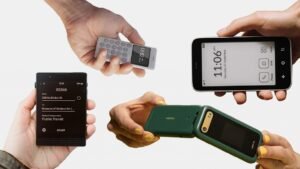
When people think of a dumbphone, they often picture bulky, pre-2010 plastic devices. While vintage Nokia flip phones are enjoying a massive renaissance, today’s market for minimalist hardware offers sophisticated alternatives designed specifically for this movement.
Modern feature phones fall into two primary categories:
Nokia 2720 Flip, TCL Flip, Cat S22Designed Minimalist DevicesE-paper or monochrome displays, custom distraction-free OS, sleek aesthetic.
| Phone Type | Key Characteristics | Popular Examples |
| Classic Feature Phones | Tactile keypads, long battery life, basic SMS/calls, no app store. | |
| Extremely affordable ($30–$80). | ||
| Includes essentials like GPS or music, but strictly no social media or web browsers. | Light Phone II & III, Punkt MP02, Mudita Pure |
These devices don’t just reduce friction; they restore physical boundaries. Without high-definition screens, vibrant colors, or endless feeds, the device reverts to what it was originally meant to be: a simple utility tool.
3. The Surprising Drivers: Gen Z and Youth Culture
While older generations might assume digital detoxing is driven by tech-averse boomers, the strongest momentum is coming from Gen Z and Millennials. Having grown up as digital natives, young adults are the first generation to experience the lifetime impacts of smartphone ubiquity.
Viral trends across social platforms—ironically tagged #BringBackFlipPhones or #DigitalDetox—have garnered tens of millions of views. Young users report feeling burnt out by the relentless pressure to perform online, maintain social media aesthetics, and remain perpetually reachable.
“When I swapped my smartphone for a flip phone, the first week felt like withdrawal,” shares one 21-year-old college student. “By week three, my brain felt clear for the first time since middle school. I could actually finish a book without picking up my device every five minutes.”
For Gen Z, opting for a dumbphone is both a mental health decision and a subcultural statement. It signals intentionality, authenticity, and a refusal to let algorithms dictate their free time.
4. What Happens When You Downgrade?
Those who transition to “digital quiet” consistently report subtle yet profound shifts in their day-to-day existence:
Restored Presence
Without a glass rectangle acting as an anchor, mundane moments—waiting in line, riding public transit, eating lunch—become opportunities for observation and reflection rather than default scrolling sessions.
Deeper Relationships
Conversations are no longer interrupted by screen glances. Eye contact returns, active listening improves, and social interactions feel grounded in real time.
Reclaimed Leisure Time
Cutting screen time from five hours a day to thirty minutes suddenly yields several hours of unstructured free time every day. Users often return to hobbies long abandoned: reading, painting, cooking, or playing music.
5. Navigating the Practical Challenges
Switching entirely to a dumbphone isn’t without friction in a world designed around apps. Essential modern utilities can pose real hurdles:
Authentication & Banking: Many institutions mandate two-factor authorization apps or mobile-only authentication.
Transport & Payments: Rideshare apps (Uber/Lyft), mobile boarding passes, and QR-code-only menus in restaurants assume smartphone access.
Work Communication: Tools like Slack, Teams, or WhatsApp are standard workplace requirements.
Because of these systemic dependencies, many adopters practice hybrid digital minimalism. They maintain a smartphone kept tucked away in a drawer or bag for specific tasks (work or travel) while using a feature phone with a SIM card swap as their primary daily driver—especially on weekends or evenings.
The Path Forward: Choosing Intentionality
The “Digital Quiet” movement isn’t about destroying technology; it is about right-sizing its role in our lives. Smartphones are incredible tools, but when the tool starts using the owner, friction becomes necessary.
Swapping a smartphone for a dumbphone may not be a permanent answer for everyone, but it raises a vital question: How much of your life are you willing to trade for digital noise? Whether through a total hardware downgrade or setting strict boundary habits, stepping away from the screen opens up the space where real life actually happens.